
[Artist’s Spotlight] An interview with designer and illustrator John Kafka - Where traditional painting meets contemporary fashion
![[Artist’s Spotlight] An interview with designer and illustrator John Kafka - Where traditional painting meets contemporary fashion](https://embed.pixiv.net/pixivision/en/a/12013/ogimage.jpg)
On Artist's Spotlight, we interview artists around the globe who are active on pixiv to shed light on their work and how they create their illustrations.
These interviews often discuss topics related to the business of illustration, such as how to take your skills to the next level as a creator and things to keep in mind as a professional, making them a valuable source for both aspiring and professional illustrators.
This time we interviewed Korean illustrator and designer John Kafka about the behind-the-scenes of his recent works. He has garnered attention in a variety of fields, from organizing exhibitions to creating illustrations for the music video of a cover song by singer Ado.
In this article, we’ll take a look at the process behind a selection of John Kafka’s works, along with excerpts from the interview and some behind-the-scenes stories that didn’t make it into the video.
If you’d like to hear more from John Kafka's interview, be sure to check out the video below!
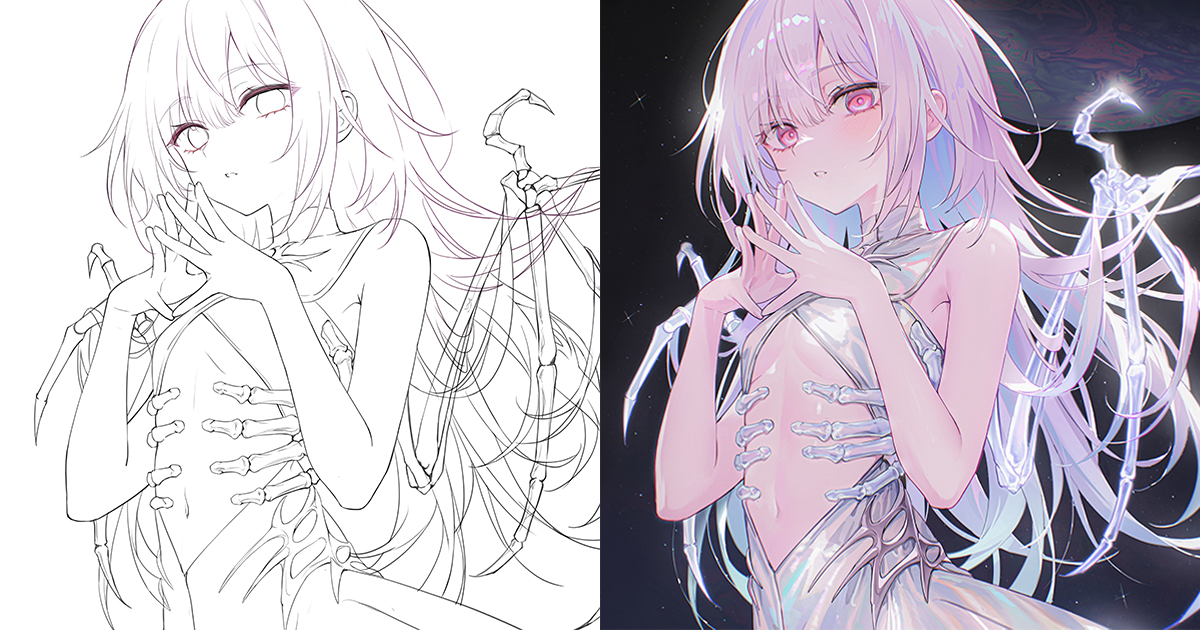
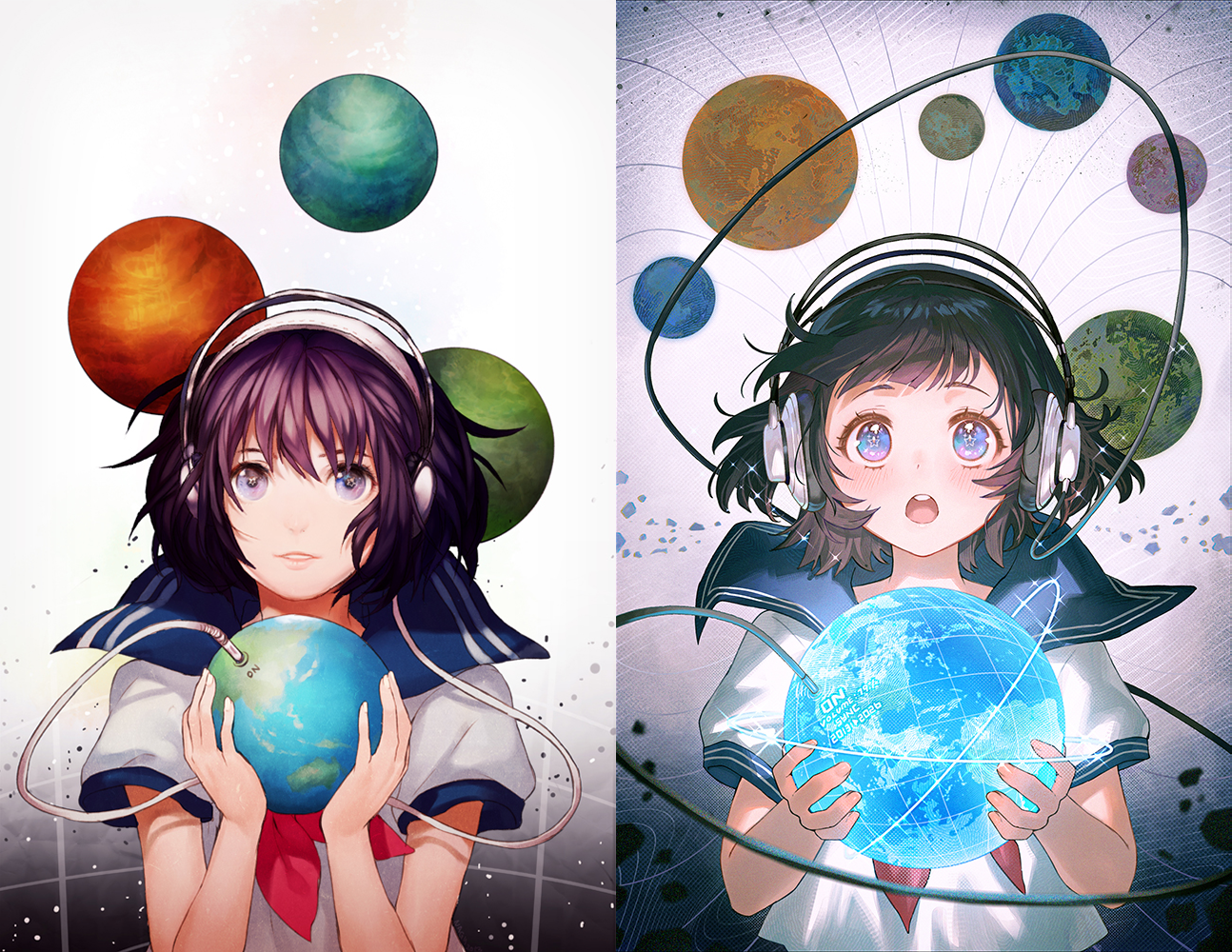
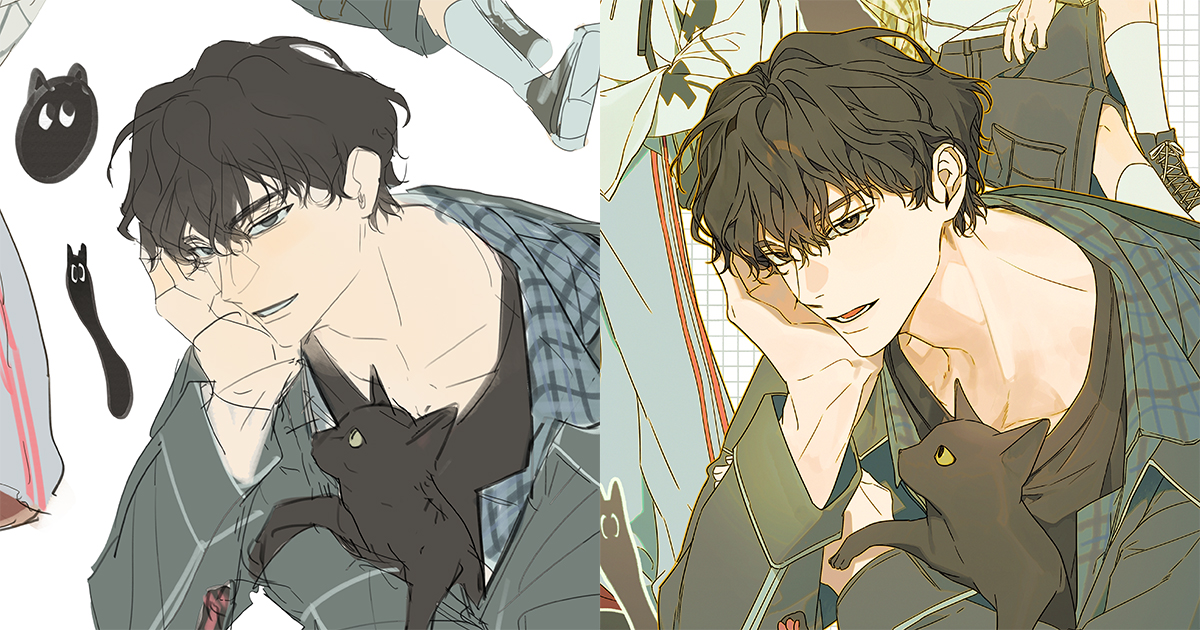
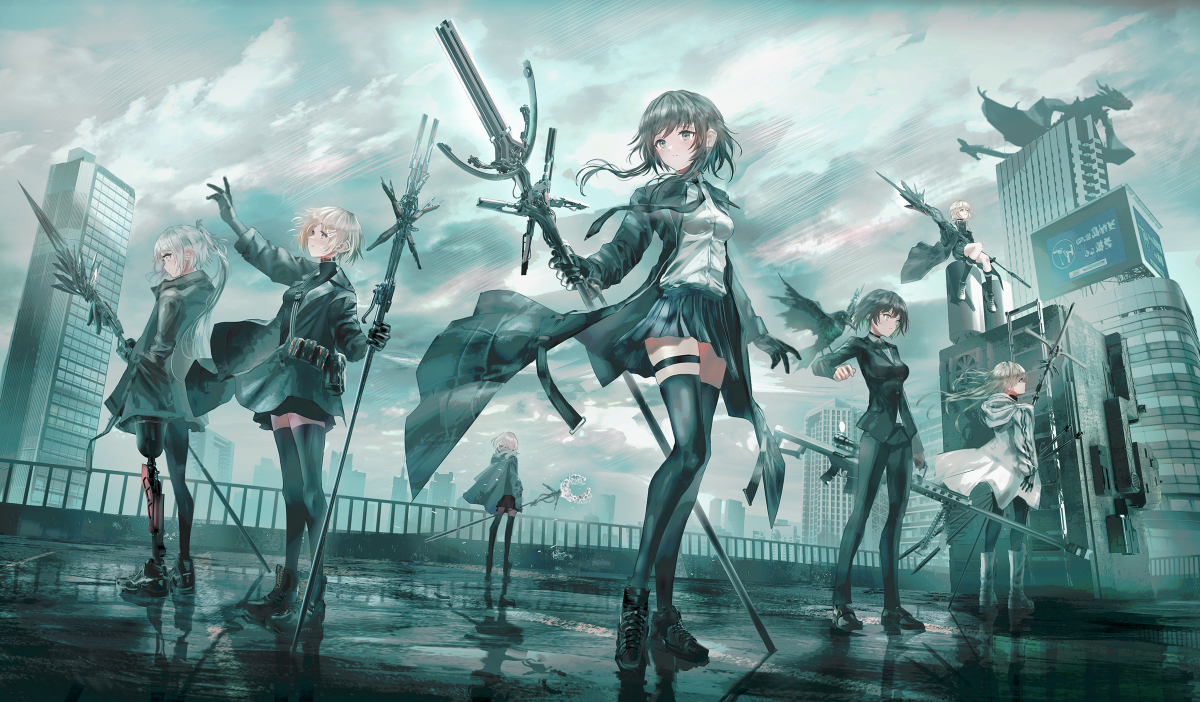
Original illustrations by John Kafka


🍇
by john kafka


龍
by john kafka


香
by john kafka

Developing the habits of drawing consistently and expressing yourself honestly

- John Kafka
A designer and illustrator based in South Korea. He strives for originality in his use of color, composition, and the overall atmosphere of his work, and continues to create pieces characterized by delicate details and vibrant colors.
He has collaborated with a diverse range of companies, including CASETiFY, HYBE, HoYoverse, Riot Games, and Yostar, and has released work across a wide range of fields, including albums, games, music videos, key visuals, and brand projects with artists such as Ado, Eve, hololive, and NIJISANJI.
He has also published an art book compiling his personal works, and continues to expand the scope of his activities through collaborations with fashion and apparel brands, teaching at academies and online courses, and serving as a judge for illustration-related competitions. In May 2025, he held a collaborative exhibition with HEBI in Seoul and continues to hold solo exhibitions and other exhibitions in various Asian cities, including Tokyo.
Transcending the boundaries between illustration and design, he continues to explore new forms of visual expression while balancing commercial work with his personal creative practice.
──── Could you tell us about your roots as a creator? When did you start drawing, and what inspired you to begin?
I’ve loved drawing since I was little, but I didn’t start doing it as a hobby until I was in middle school. I just couldn’t get enough of the act of drawing itself—it was so much fun. I didn’t start seriously considering it as a future career path until I entered high school. Back then, I was more interested in design than illustration, so I focused my research on colleges with programs in visual design and similar fields.
The main reason I started drawing was the immense inspiration I felt from watching manga, anime, and movies. I was completely captivated by the visual expression and storytelling in those works. Also, since I had several friends around me who drew, I naturally began to want to express something in my own way and share it with others! It started with such a simple motivation, but I’ve continued drawing ever since.
──── You’re currently working as a professional illustrator, but when exactly did you decide to pursue illustration as a career?
It was actually about three or four years ago that I started thinking about being a professional illustrator as my full-time job. Until then, I had mainly been working in editing and design.
Around the time I was thinking about changing jobs, I wondered what it would be like to turn the drawings I’d been doing as a hobby into a side gig, so I started posting on social media. To my surprise, the response was much better than I’d expected, and I really enjoyed myself. That’s when I decided to take drawing a little more seriously. I just kept drawing because I genuinely enjoyed it, and before I knew it, it had become my full-time job—and here I am today.
──── So you originally worked as a designer. What kind of design work did you do?
I mainly worked on editing books and magazines and designing website user interfaces. So, it wasn’t as if I was in a field completely unrelated to art.
I was also in charge of editing illustration collections, so I was constantly surrounded by amazing artwork. Partly because of that influence, as I drew myself, I began to want to publish my own art book someday and put on cool exhibitions, just like those artists. They were people I really looked up to. I think it was precisely because of those feelings that I decided to dive into this world myself.
──── During your career as a professional artist, were there any periods or specific events that led to changes in your artistic style or approach?
I believe the impetus for any changes I've made lies in current trends and shifts in the market. In today’s world, it’s extremely important to have a consistent style (brand value) that allows viewers to recognize an artist at a glance—so that when they see a piece of art, they know it’s by a specific artist. However, if I keep using the same style over and over, viewers will eventually grow accustomed to it, and I, as the artist, will start to feel stuck in a rut and get a little tired of it.
For this reason, while I value my unique identity and brand value, I approach my work with the mindset of occasionally updating my style to keep pace with market changes.
──── When creating illustrations, there are various elements to consider, such as lighting, composition, color schemes, and textures. Is there any particular aspect you pay special attention to?
Of course, I pay close attention to every element—textures, composition, and so on. But among all of these, what I consider most important is the purpose of the artwork. When I draw, rather than simply focusing on making it look cool, I try to first think about what this artwork is meant to express and what message it’s meant to convey. That’s because I believe art is a means of communicating something.
So, even when drawing people or characters, rather than simply asking, “How can I make this look especially cool?” I focus on what I should convey to the viewer through each illustration and how I can present it in my own way convincingly.
I view elements like composition, color scheme, and lighting as tools for effectively conveying that purpose. The reason I draw inspiration from film direction and various other works isn’t simply to find visually striking scenes, but rather to understand how a single scene moves people’s emotions and gaze, and how it persuades them.
Ultimately, I think what I focus on most isn’t so much making the artwork look good in and of itself, but rather clarifying the message I want to convey and figuring out how to present it to the viewer in my own way in a compelling manner.
──── Do you have any specific practice routines you follow to improve your skills?
In my case, since I started working at a fairly early stage, I think the hands-on experience itself served as practice. There's a saying that I like: "Practice as if it were the real thing and treat the real thing as if it were practice." That’s exactly how I feel about it. I’ve been honing my skills by being active in the field. Because of that, I probably haven’t done much in the way of personal practice.
If I had to name something that could be called practice, it would be analyzing photographs and paintings. Whenever I watched a movie and came across a scene or shot I liked, I’d analyze it in my own way to figure out why I found it good, and then sketch that composition—usually one or two sketches, but sometimes as many as five. I think that’s how I cultivated my eye for art.
As for drawing technique itself, there are aspects that naturally improve simply by continuing to draw. As your perspective broadens, the range of what you can express expands accordingly, allowing you to try various new approaches. I trained my artistic skills with that mindset.
Additionally, I made a conscious effort not to copy other people's styles and focused on creating something different myself; deliberately trying out alternative drawing methods also served as practice for me.
──── Could you share any habits or mindsets you think are important for improving for any readers who want to try art?
For those just starting out, there are so many things you won't understand at first, and I think it’s common to feel at a loss about where to begin. This is something I often tell my students in my role as an art instructor: above all else, you need to develop the habit of drawing consistently. Make this your top priority.
On top of that, you should cultivate the habit of honestly expressing your emotions and using the techniques you’ve learned so far through your artwork. I feel this is what matters most. In a broad sense, I believe visual expression is actually quite simple. After all, it’s the process of conveying a message through your work and persuading the viewer to believe your message.
That’s precisely why I think it’s important, as you create your work, to reflect on yourself and ask: “Am I being true to what I'm trying to express right now?” and “Are the emotions and intentions I want to convey truly embedded in my work?” If you patiently repeat this process, anyone can learn to express wonderful things in their own unique way.





![[Artist’s Spotlight] An interview with designer and illustrator John Kafka - Where traditional painting meets contemporary fashion](https://i.pximg.net/imgaz/upload/20260810/573420973.jpg)